Sunday, April 20, 2014

Easter: Now the green blade riseth


Now the green blade riseth
from the buried gain,

wheat that in dark earth

many days has lain;

love lives again,
 that with the dead has been:

Love is come again like wheat that springs up green.

In the grave they laid him,

Love whom hate had slain,

thinking that never

he would wake again,

laid in the earth like grain that sleeps unseen:

Love is come again like wheat that springs up green.

Forth he came in quiet,

like the risen grain,

he that for three days

in the grave had lain,

quick from the dead
 the risen Christ is seen:

Love is come again like wheat that springs up green.

When our hearts are wintry,

grieving, or in pain,

Christ's touch can call us

back to life again,

fields of our hearts 
that dead and bare have been:


Love is come again like wheat that springs up green.

(You can listen to this song here in a lovely medieval-ish rendition.)

“It was no accident, no coincidence, that the seasons came round and round year after year. It was the Lord speaking to us all and showing us over and over again the birth, life, death, and resurrection of his only begotten Son, our Savior, Jesus Christ, our Lord. It was like a best-loved story being told day after day with each sunrise and sunset, year after year with the seasons, down through the ages since time began.”

(I don't think I have any pictures of wheat growing, but this is a field I see regularly that is bare and muddy and ugly during the winter and then suddenly bursts into bloom!)

Holy Saturday: Bridegroom and Wedding


I wasn't planning to write anything today, and I won't say much, except that I was so struck by this article by Elizabeth Scalia that I've decided to share it. Struck by the piece itself and by the connection to Donne's poem that I shared a few posts ago.

Scalia begins with words from Pope Benedict,

Dear brothers and sisters, let us look at Christ pierced in the Cross! He is the unsurpassing revelation of God's love, a love in which eros and agape, far from being opposed, enlighten each other.

On the Cross, it is God Himself who begs the love of His creature: He is thirsty for the love of every one of us.


. . . and I will let you read the rest for yourself. It is worth reading.


This image of Christ as Lover and Bridegroom struck me today also as I went into an Orthodox Church nave to meet a friend. I always love being there. The space itself, with its other-wordly icons and candles and silence, is beautiful, and the people I know there are beautiful.

But today it was even more beautiful, with rose petals and other flowers carpeting the floor, and flower garlands on the doorways and other places. Just as it was when I went there for a wedding a few years ago.

My friends are there now, as I write, nearly midnight. The church is about to be completely dark, except for one candle. And then light will spread and grow, and joyous music will begin, and Alleluia's will be cried out after long weeks of none. And the people will later feast as if for a wedding, celebrating a marriage unlike any other.

The Cross began in Love and leads to Love.


Friday, April 18, 2014

Good Friday: The Cross

I thought I would just see how many cross pictures I have since getting this computer in October . . .


The cross from Father Stevens, made from Jerusalem olive tree wood.


Visitation Monastery gateway, Mobile, Alabama.


On the spine of one of my Bibles.


Spring Hill College, Mobile.


Chapel at Spring Hill College.


Spring Hill College.


My window at home.


First little one I saw this year.


Dogwood blossom, with its own cross legend.


We sang this last night.

Beautiful.

Love can make beauty possible from the most terrible things.

Like the cross.


Thursday, April 17, 2014

Maundy Thursday: Turning


(Caveat lector: I started writing this on the 26th day of Lent and had to leave off. Spring is now even further along than what I describe here......Just to keep it honest.)

Where we live, winter is finally turning into spring. The woods in this area have turned into a glorious celebration of new life. Grass is turning green in some places. People are turning their soil and planting things.


My jars and cups are turning into temporary vases as I bring daffodils into the house from time to time. Which turns walking through the common areas into a scent-uous delight.


I'm turning back to my routine of walking most mornings before anything else, though today we went for a walk together in the afternoon and saw the lovely magnolia pictured below.


And a huge field covered in these precious little purple wildflowers, whose name I still do not know, even though they have been a part of my life since as early as I can remember. (A quick search for "purple wildflowers that bloom in spring" tells me they are quite certainly a nettle, some type of Lamium. It's amazing how you can find things on the Internet....)


But the "turning" that has been on my mind when I'm not caught up in the glory of spring coming, is from another section of the book we've been reading most evenings during Lent, that I've quoted from in recent posts.

Following are excerpts from a sermon by Henry Drummond, of whom I know nothing beyond what the book tells me, that he was a British revivalist and preacher in the last half of the nineteenth century. He writes about the story of Peter and his betrayal of Jesus.

Tonight as I write, it is actually even more appropriate to write of this, rather than on the twenty-sixth day, as this is remembered as the night the betrayal happened. Having just returned home from a Maundy Thursday service, with the washing of feet, the sharing of bread and wine, and the almost surprisingly heartbreaking stripping of the altar--or altars, in the case of the church I was in--the story is even more poignant.

Having one's feet washed by anyone is a humbling and touching experience. Having one's feet washed by Jesus . . . I cannot imagine what it was like for Peter, for any of them. It seems to have evoked deep emotion in the disciples and especially in Peter, a deep sense of belonging, of desire to "have part in" rather than "have no part in me," as Jesus put it.

And yet . . . and yet . . . hours later, he denied knowing him.

Drummond writes,

Those of us who know the heart's deceit would surely find it difficult to judge this man--this man who had lived so long in the inner circle of fellowship with Christ, whose eyes were used to seeing miracles, who witnessed the glory of the transfiguration; this man whose ears were yet full of the most solemn words the world had ever heard, whose heart was warm still with Communion-table thoughts. We understand how he could have turned his back upon his Lord, and, almost ere the sacramental wine was dry upon his lips, curse him to his face. Such things, alas, are not strange to those of us who know the appalling tragedy of sin.

But there is something in Peter's life that is much greater than his sin. It is his repentance. We all to easily relate to Peter in his sin, but few of us grasp the wonder of his repentance. . . The real lesson in Peter's life is one of repentance. His fall is a lesson in sin that requires no teacher, but his repentance is a great lesson in salvation. And it is this great lesson that contains the only true spiritual meaning to those who have personally made Peter's discovery--that they have betrayed our God.

And then what I find especially beautiful--

What then can we learn from Peter's turning around? First, it was not Peter who turned. It was the Lord who turned and looked at Peter. When the cock crew, that might have kept Peter from falling further. But he was just in the very act of sin. And when a person is in the thick of his sin his last thought is to throw down his arms and repent. So Peter never thought of turning, but the Lord turned. And when Peter would rather have looked anywhere else than at the Lord, the Lord looked at Peter. This scarce-noticed fact is the only sermon needed to anyone who sins--that the Lord turns first.

Then he notes that it was not with a loud voice Jesus turned to him, not even with a sound at all.

A look, and that was all. . . God did not threaten . . .We misunderstand God altogether if we think he deals coarsely with our souls. If we consider what has really influenced our lives, we will find that it lies in a few silent voices that have preached to us, the winds which have passed across our soul so gently that we scarce could tell when they were come or gone. [He tells the story of Elijah and the still small voice from I Kings 19:11-12.]

When God speaks he speaks so softly that no one hears the whisper but yourself . . . Stay right where you are. Don't return into the hustle and bustle of life until the Lord has also turned and looked on you again, as he looked at the thief upon the cross, and until you have beheld the "glory of the love of God in the face of Jesus."


As winter turns to spring and hearts turn toward death and resurrection, and even flowers turn toward the sun, I am thankful for this reminder that God, through Christ, turns toward us even before we turn toward Him.


Saturday, April 12, 2014

Poetry in Unexpected Places

We went to the Spring Art Walk on Broad Avenue last night. I used to work on Broad Avenue, and at that time my friends would say on hearing about my new counseling job, "Are you sure you want to work there? Aren't you scared? Are you sure it's safe?"

After a horribly tragic shooting that killed several members of a family not far from our building, my boss forbade my usual habit of walking the two blocks down the street between our place and the clinic we were associated with. If I had to go, I had to drive. Just to be safe.

That was over five years ago. In the meantime, a lot has been happening in that part of town. Good stuff happening. Good people making things happen. Things are changing.

Last night we went with friends to that very same Broad Avenue, a little further down the street. We visited art galleries, a just-opening bakery, a paint-your-own-furniture store. We talked with artists, ministers, a man who helps folks in the city learn how to keep their chickens to have fresh eggs. We heard live music. We saw smiles and heard laughter. Nothing felt unsafe.

A young man was sitting in a chair on the sidewalk with a typewriter in his lap. A sign held up by a friend said, "Personal Poem Written Just for You." It intrigued me, so we stopped and asked. He said, You tell me about yourself, and I write a poem. I asked about the cost. He said, Whatever you decide. After you read it, you can pay me what you want.

So we gave him about two minutes' worth of information (or less) about us, and in a few minutes, here is what he gave us. It fits so well with this that I have to share it:


We stood there and read it in the streetlight. I was impressed. We paid him.

I asked what kind of typerwriter he had. An Underwood! I said, "I'm an Underwood myself!" (It's my maiden name.)

I asked him about himself. You can learn some of what he told us here. I said I might have to write a poem about him.

He asked if we'd be willing to take a picture of the poem later and email it to him. He's working on a book. I said we would.

I said to my man, as we walked down the street as the sun began to set, "I never thought I'd be walking down this street for fun."

And I'm saying to myself right now, "I never thought I'd find poetry on Broad Street."

And then I'm thinking of all the people who sat on the couch in my office, and I said, "Tell me about yourself." And they did. I heard stories I could not hear anywhere else. Hard stories, stories of suffering and pain and courage and endurance. Stories I can never publish but never forget.

They would ask about the cost, and within a certain range I was able to say, "You pay what you can." And we didn't write poetry, though I did take notes. And I heard stories and met people and learned about lives that could make a book. I learned about the battlefields of many lives, and I give thanks for all those days, and all those years. They left a living poetry in my heart.

And I'm happy to see light and joy on Broad Avenue.

Thank you, Adam, for the poetry.


Monday, March 31, 2014

Lent, Day Twenty-Seven: Confluence


Over the weekend, while driving here and there running errands in my car, I listened to an interview by Ken Myers of Mars Hill Audio with Gerald McDermott on a recent book he cowrote on The Theology of Jonathan Edwards.  One theme that McDermott emphasized in Edwards' work is the beauty of God. Because most people's familiarity with Edwards is limited to one less-than-beautiful sermon, Edwards is not generally thought of someone who was deeply in love with God and considered God's beauty to be the primary quality of God that draws people to belief.

At one point, either McDermott or Myers said something like, "So for him, it wasn't about being driven by duty, but drawn by beauty." Which easily sticks in the mind. And it did.

Separately, yesterday at some point the thought came to me, "You can't reason people out of something they weren't reasoned into." (Turns out that comes from Jonathan Swift, but I don't know where I heard it. Probably by way of my high school English teacher, as it seems like the sort of quotation he would have on his chalkboard.)

And I was thinking about how hard it is to reason oneself out of behaviors or even ideas that did not come about primarily through reason but through "the affections," as Jonathan Edwards referred to the deeper part of the human being, what the Hebrew scriptures refer to as "the heart," though it is much more than what Americans usually mean by "heart," which they separate completely from reason. If I understood correctly about Edwards, he wasn't separating feeling and thinking and calling "the affections" the emotional part of a person. Instead, he meant the deep part of a person that influences both their thinking and their feeling. It has to do with the heart's desire for meaning and beauty and love.

And so if the heart's desire for meaning, beauty, and/or love has led someone to a particular belief, or practice, or relationship, or whatever, even if that belief, practice, or relationship turns out not to be a true or sufficient object of desire, purely reasoning about it is not likely to help a person see that or change their ways. We see this all the time with the obvious addictions. People really and truly want and need love, or peace, or happiness, and they find something that temporarily gives some semblance of that in a substance or relationship. But the drug, or drink, or relationship ends up causing more trouble than the seeming good it brings. Simply pointing this out and reasoning doesn't generally help people, even when they want to make changes. They usually have to have something greater to motivate them. Something that offers greater love, peace, or happiness.

And we can all relate to this, I think, when it comes to something as simple as food. We need food to live. It's normal to enjoy good food. Good food is a great blessing. And yet we can overeat and make ourselves unhealthy in all kinds of ways by it. But I don't know many people who succeed in changing their eating habits simply by reasoning themselves away from that luscious piece of chocolate cake on the table before them. We need a better motivation than "that just isn't logical."

So, with these things going on in my mind the past couple of days, I sat down this morning and saw on my "Ordo Kalendar" that today is the day of John Donne. One of my favorites. I decided I should read something by him to honor the day and got out our "Top 500 Poems" anthology. The first poem they had in the 25 pages on Donne was one I remember learning from my high school English teacher, who was a gifted actor and excellent reader-aloud of poetry:

Batter my heart, three-person'd God, for you
As yet but knock, breathe, shine, and seek to mend;
That I may rise and stand, o'erthrow me, and bend
Your force to break, blow, burn, and make me new.
I, like an usurp'd town to another due,
Labor to admit you, but oh, to no end;
Reason, your viceroy in me, me should defend,
But is captiv'd, and proves weak or untrue.
Yet dearly I love you, and would be lov'd fain,
But am betroth'd unto your enemy;
Divorce me, untie or break that knot again,
Take me to you, imprison me, for I,
Except you enthrall me, never shall be free,

Nor ever chaste, except you ravish me.

"Reason . . . proves weak  or untrue." Being driven by duty just isn't enough. But being drawn by beauty/love has great power, even the power to cause Donne to wish to be enthralled (which can mean both to be enchanted or captivated, and also to be enslaved) by God.

This is a rather rambling post, but I was fascinated this morning to find this poem before me and to see how it fit with the things I had been thinking about.


Oh, yes, and also that the psalm for today was Psalm 89, which begins, "I will sing of thy steadfast love, O Lord, for ever," and has several themes that connect with Edwards' themes.

And it all relates to Lent, at least in my mind (which I think can find connections between anything and anything else sometimes), because it has do with fasting and discipline in general, and with the beauty of Easter/resurrection that is the very reason for Lent in the first place.

But more on that later. And perhaps it will be less rambling. But only perhaps.

A few days later, April 8, I just found this article on "John Donne in Lent." I had no idea just how appropriate it was that these thoughts came together when they did. And I don't believe I have ever written such a hyperlinked blog post....

Sunday, March 23, 2014

Dvadeset i Tri na Dvadeset i Treći (Twenty-Three on the Twenty-Third)


We interrupt this Lent for a special announcement . . . Twenty-three years ago today, we were married. Like today, it was a bit overcast and windy. (In fact, we have a hilarious picture of my veil blowing in the wind at one point.) Unlike today, we were twenty-three years younger and had little idea what lay ahead.

I remember hearing before I married that every wedding has something significant go wrong, that it would be bad luck if you didn't.

Well, our expectant-mother cake-maker was ordered on strict bed rest the day before the wedding. Our music director's child got chickenpox a few days before, and his wife was in cancer treatment and couldn't be exposed to it. And during the ceremony itself, one of the groomsmen fainted, nearly taking down with him all the ivy connecting the arch and flowers.

So according to the conventional wisdom, we should have been inoculated against bad luck. On the other hand, a dear woman made a wonderfully delicous cake at the last minute--and still came to the wedding despite the lack of sleep. And the music director was able to find childcare and direct the choir, which meant the world to me, since he had been my chorus director and beloved Bible teacher. And another groomsman caught the fainting one, saving the wedding from disaster; they even revived him before the end of "Lord, Make Me an Instrument" came, most people didn't even know it ever happened, as they had heads bowed and eyes closed for that prayer/song.

So, who knows, maybe all those last-minute "saves" undid our inoculation.

Of course, it wasn't "bad luck" that caused the war in former Yugoslavia. It was much more complicated than that. It may have been coincidence that we had bought our tickets to return there the very week that the war started. And it wasn't "luck" that we came from different cultures and spoke different languages; it was very much a choice we made to marry, knowing we came from different worlds. So I wouldn't say we had bad luck. But we did have a very tough start.

I've often looked back and wondered how many people choose this hymn as wedding music. Certainly today I don't hear it at weddings, and I don't know if I ever did growing up. But I knew I wanted it at ours, and Drazen agreed to it. We really were not expecting the war, but I already knew that moving so far away from home would be hard. And we knew that neither of us had "ease" or "idleness" on our list of hopes and dreams.

Father, hear the prayer we offer,
Nor for ease that prayer shall be,
But for strength, that we may ever
Live our lives courageously.

Not forever by still waters
Would we idly, quiet stay,
But would smite the living fountains
From the rocks along our way.

Be our strength in hours of weakness,
In our wand'rings be our guide;
Through endeavor, failure, danger,
Father, be thou at our side.

Twenty-three years later, by the grace of God, here we are. And it is by the grace of God.  He heard our prayer, and hears our prayers, and has given strength and guidance and many other things needed along the way.

And, I must add, I married a patient and persevering man. I don't think I'm an easy person for an engineer to live with; I know I'm not, for him. It's almost laughable to me, now a marriage therapist, to look at our scores on various personality tests. We are both extreme in most areas, and we are opposites in our extremities--except for the "intuitive" part on the Meyer-Briggs. So maybe intuitively we both knew we could make it, even with all the reasons we might not. Whatever the case, I'm thankful that he is who he is, and that he loves me as I am.

We didn't have these words at our wedding; I just noticed today that they are a part of the hymn based on St. Francis' Canticle of the Creatures--

And all ye men of tender heart,
Forgiving others, take your part.
O sing ye! Alleluia!
Ye who long pain and sorrow bear,
Praise God and on Him cast your care!

But we did have other verses sung, and thanks to God's faithfulness in all our wanderings, it seems a good way to end this writing about our anniversary.

All creatures of our God and King,
Lift up your voice and with us sing,
Alleluia! Alleluia!....

Let all things their Creator bless,
And worship him in humbleness,
O praise him! Alleluia!
O praise the Father, praise the Son,
And praise the Spirit, Three in One!
O praise Him, O praise Him!
Alleluia! Alleluia! Alleluia!


Wednesday, March 19, 2014

Lent, Day Fifteen: Dust in the Wind


Holy and  good and generous God,
     It is the day of the ashes,
     and I am reminded that my life
     on earth will end,
     and could end at any moment.
But I am alive, made of dust,
     breathing the air you give me.
Thank you for the dust that is me
     and the air that sustains me.
May I more and more
     be sustained by your Spirit
     and less by the things of the earth.


It is interesting to me to see what I wrote on Ash Wednesday over a decade ago, when I had just begun to realize and understand what Ash Wednesday and Lent were and what they meant.

I did not know that that same year would usher in the period of five deaths in less than six months of people I loved. I could not know how deeply I would experience the sense of transience that I expressed in the poem.

"All we are is dust in the wind." The song by Kansas, much as I enjoy hearing its music and the expressiveness of the lyrics, is a pretty sad, hopeless song. It leaves you with the feeling that it's better to just not think about the fact that life will end, because it's all pointless.

"Nothin' lasts forever but the earth and sky." I guess you could say here is where I take a different turn from the song. Because I believe a lot lasts forever besides the earth and sky. . . like God, and love, and joy, and souls, and memories, and meaning, and relationships between formed-from-dust people formed here on this planet of dust and water. And if these things last, they are certainly worth hanging on to, in fact, worth pursuing, even though the song says, "Now don't hang on...."

The word for spirit and wind is the same (well, I should say the words are the same, since it holds true in both Hebrew and Greek) in the ancient languages of scripture. And if I think of the Holy Spirit as the wind, then I cannot think of anything more meaningful and desirable than to be "dust in the wind."

(The photo above came via this website. http://peterlachnewinsky.wordpress.com/2011/10/26/dust-ode/ 
I found plenty of photos of dust in the wind in various forms searching the Internet, but was most drawn to this one. Wouldn't you know, it was used to accompany another poem about ashes and dust? )

Monday, March 17, 2014

Lent, Day Thirteen: Fasting Alone in the Desert

I didn't grow up in a culture of fasting. We read about it in the Bible, but I don't know if anyone in my world of people actually fasted. I was in college before it became a topic of actual practical significance, and I knew people who did it, and I began learning about it and doing it, too.

The article below comes from an Orthodox blog that I really like, and a good friend made sure I saw this particular post. I highly recommend it. Fasting alone is not nearly as helpful as fasting alongside others and with the wisdom of the ages accompanying you.


Few things are as difficult in the modern world as fasting. It is not simply the action of changing our eating habits that we find problematic - it’s the whole concept of fasting and what it truly entails. It comes from another world.
We understand dieting - changing how we eat in order to improve how we look or how we feel. But changing how we eat in order to know God or to rightly keep a feast of the Church - this is foreign. Our first question is often, “How does that work?” For we live in a culture of utility - we want to know the use of things. Underneath the question of utility is the demand that something make sense to me, and that I be able to ultimately take charge of it, use it as I see fit and shape it according to my own desires. Perhaps the fast could be improved?
Our modern self-understanding sees people primarily as individual centers of choice and decision. A person is seen as the product of their choices and decisions - our lives are self-authenticated. As such, we are managers.
Of course there are many problems with this world-view from the perspective of Classical Christianity. Though we are free to make choices and decisions, our freedom is not unlimited. The largest part of our lives is not self-determined. Much of the rhetoric of modernity is aimed towards those with wealth and power. It privileges their stories and mocks the weakness of those without power with promises that are rarely, if ever, fulfilled.
Our lives are a gift from God and not of our own making. The Classical Christian spiritual life is not marked by choice and self-determination: it is characterized by self-emptying and the way of the Cross.
When a modern Christian confronts the season of Lent - the question often becomes: “What do I want to give up for Lent?” The intention is good, but the question is wrong. Lent quickly becomes yet another life-choice, a consumer’s fast.
The practice of the traditional fast has been greatly diminished over the past few centuries. The Catholic Church has modified its requirements and streamlined Lenten fasting (today it includes only abstaining from meat on the Fridays of Lent - which makes them similar to all the other Fridays of the year). The Protestant Churches that observe the season of Lent offer no formal guidelines for Lenten practice. The individual is left on their own.
Orthodoxy continues to have in place the full traditional fast, which is frequently modified in its application (the “rules” themselves are generally recognized as written for monastics). It is essentially a vegan diet (no meat, fish, wine, dairy). Some limit the number of meals and their manner of cooking. Of course, having the fast in place and “keeping the fast” are two very different things. I know of no study on how Orthodox in the modern world actually fast. My pastoral experience tells me that people generally make a good effort.
Does any of this matter? Why should Christians in the modern world concern themselves with a traditional practice?
What is at stake in the modern world is our humanity. The notion that we are self-authenticating individuals is simply false. We obviously do not bring ourselves in existence - it is a gift. And the larger part of what constitutes our lives is simply a given - a gift. It is not always a gift that someone is happy with - they would like themselves to be other than they are. But the myth of the modern world is that we, in fact, do create ourselves and our lives - our identities are imagined to be of our own making. We are only who we choose to be. It is a myth that is extremely well-suited for undergirding a culture built on consumption. Identity can be had at a price. The wealthy have a far greater range of identifies available to them - the poor are largely stuck with being who they really are.
But the only truly authentic human life is the one we receive as a gift from God. The spirituality of choice and consumption under the guise of freedom is an emptiness. The identity we create is an ephemera, a product of imagination and the market. The habits of the marketplace serve to enslave us - Lent is a call to freedom.
 A Modern Lent
Thus, a beginning for a modern Lent is to repent from the modern world itself. By this, I mean renouncing the notion that you are a self-generated, self-authenticating individual. You are not defined by your choices and decisions, much less by your career and your shopping. You begin by acknowledging that God alone is Lord (and you are not). Your life has meaning and purpose only in relation to God. The most fundamental practice of such God-centered living is the giving of thanks.
Renounce trying to improve yourself and become something. You are not a work in progress. If you are a work - then you are God’s work. “For we are His workmanship, created in Christ Jesus for good works, which God prepared beforehand that we should walk in” (Eph 2:10).
Do not plan to have a “good Lent” or imagine what a “good Lent” would be. Give up judging - especially judging yourself. Get out of the center of your world. Lent is not about you. It is about Christ and His Pascha.
Fast according to the Tradition instead of according to your own ideas and designs. This might be hard for some if they are not part of the traditional Church and thus have no fasting tradition. Most Catholics have differing rules for fasting than the Orthodox. If you’re Catholic, fast like a Catholic. Don’t admire other people’s fasting.
If you’re Protestant but would like to live more traditionally, think about becoming Orthodox. Short of that, covenant with others (family, friends) to keep the traditional fast. Don’t be too strict or too lenient, and if possible keep the fast in a manner that is mutually agreed rather than privately designed. Be accountable but not guilty.
Pray. Fasting without praying is called “the Fast of Demons,” because demons never eat, but they never pray. We fast as a means of drawing closer to God. Your fasting and your prayer should be balanced as much as possible. If you fast in a strict manner, then you should pray for extended periods. If you fast lightly, then your prayers may be lighter as well. The point is to be single - for prayer and fasting to be a single thing.
To our prayer and fasting should be added mercy (giving stuff away, especially money). You cannot be too generous. Your mercy should be as invisible as possible to others, except in your kindness to all. Spend less, give away more.
Eating, drinking, praying and generosity are very natural activities. Look at your life. How natural is your eating? Is your diet driven by manufactured, processed foods (especially as served in restaurants and fast food places)? These can be very inhuman ways of eating. Eating should take time. It is not a waste of time to spend as much as six hours in twenty-four preparing, sharing, eating and cleaning up. Even animals take time to eat.
Go to Church a lot more (if your Church has additional Lenten services, go to them). This can be problematic for Protestants, in that most Protestant worship is quite modern, i.e. focused on the individual rather than directed to God, well-meant but antithetical to worship. If your Church isn’t boring, it’s probably modern. This is not to say that Classical Christianity is inherently boring - it’s just experienced as such by people trained to be consumers. Classical Christianity worships according to Tradition and focuses its attention on God. It is not there for you to “get something out of it.”
Entertain yourself less. In traditional Orthodox lands, amusements are often given up during the Lenten period. This can be very difficult for modern people in that we live to consume and are thus caught in a cycle of pain and pleasure. Normal pleasures such as exercise or walking are not what I have in mind - although it strikes me as altogether modern that there should be businesses dedicated to helping us do something normal (like walking or exercising), such that even our normal activities become a commodity to consume.
Fast from watching/reading the news and having/expressing opinions. The news is not presented in order to keep you informed. It is often inaccurate and serves the primarypurpose of political propaganda and consumer frenzy. Neither are good for the soul. Opinions are deeply destructive to the soul’s health. Opinions are not properly considered, necessary beliefs. They are passions that pass themselves off as thoughts or beliefs. The need to express them reveals their passionate nature.
I could well imagine that a modern person, reading through such a list, might feel overwhelmed and wonder what is left. What is left is being human. That so much in our lives is not particularly human but an ephemeral distraction goes far to explain much of our exhaustion and anxiety. There is no food  for us in what is not human.
And so the words of Isaiah come to mind:
Ho! Everyone who thirsts, Come to the waters; And you who have no money, Come, buy and eat. Yes, come, buy wine and milk Without money and without price. Why do you spend money for what is not bread, And your wages for what does not satisfy? Listen carefully to Me, and eat what is good, And let your soul delight itself in fatness (Isa 55:1-2).
“Let your soul delight itself in fatness...” the irony of Lent.

Thursday, March 13, 2014

Lent, Day Nine: A Difficult Prayer (that Brings Rest to Your Soul)


I often pray to see clearly, to see people and things the way God sees them.

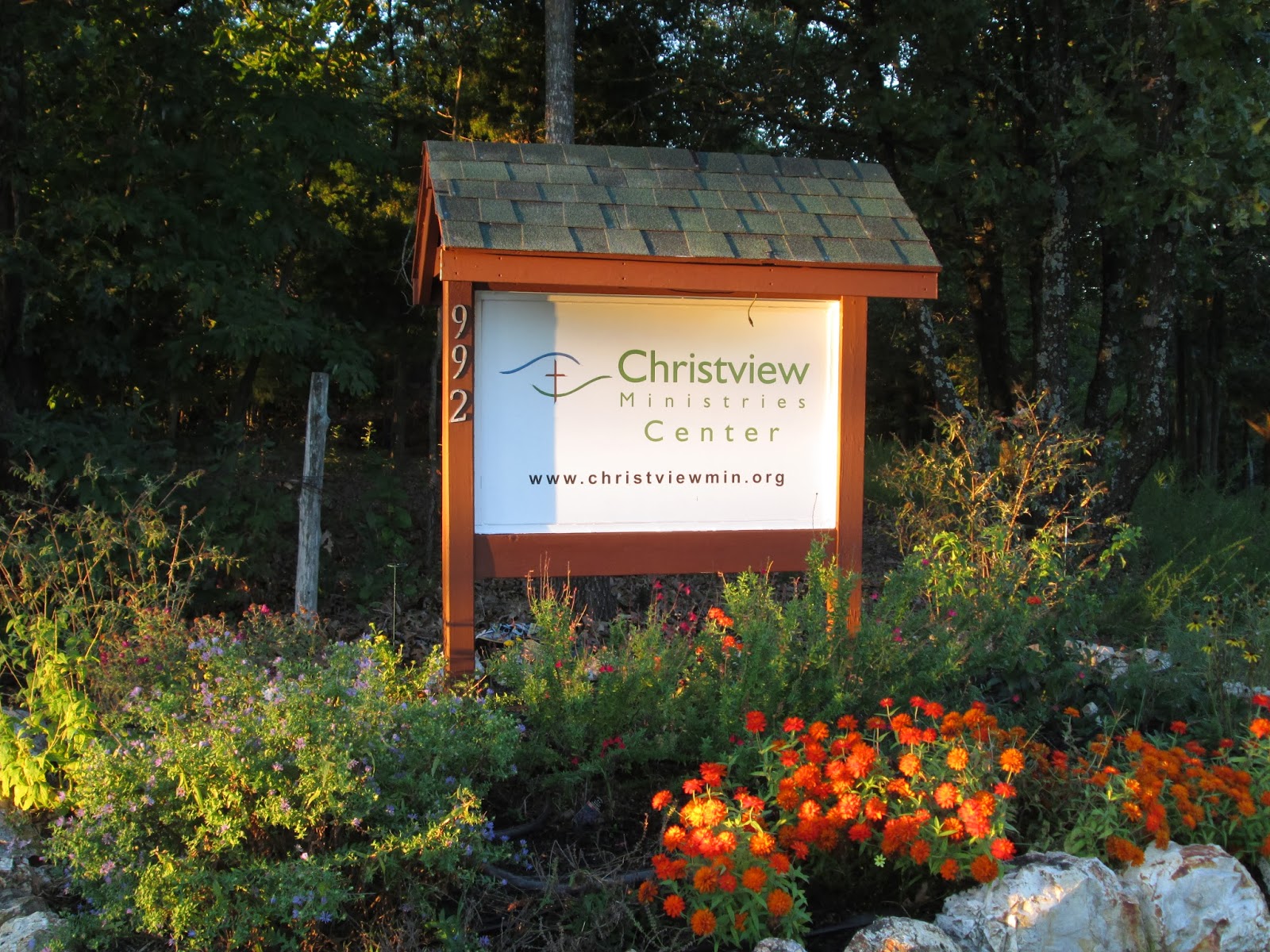
Christview Ministry Center's name is about learning to see Christ. But it's also true that if we learn to see Christ, we begin to see life differetly, to view life as Christ does.

I've shared this prayer before and have decided it is worth sharing each year at Lent. Maybe it will help you if you are also wanting to learn to see life differently.

(This came to me by way of a blogger friend at Pentimento,
who said it was written by Servant of God Merry del Val.)


O Jesus meek and humble of heart, Hear me.

From the desire of being esteemed,
From the desire of being loved,
From the desire of being extolled,
From the desire of being honored,
From the desire of being praised,
From the desire of being preferred to others,
From the desire of being consulted,
From the desire of being approved,
Deliver me, Jesus.

From the fear of being humiliated,
From the fear of being despised,
From the fear of suffering rebukes,
From the fear of being calumniated,
From the fear of being forgotten,
From the fear of being ridiculed,
From the fear of being wronged,
From the fear of being suspected,
Deliver me, Jesus.

That others may be loved more than I,
That others may be esteemed more than I,
That in the opinion of the world, others may increase, and I may decrease,
That others may be chosen and I set aside,
That others may be praised and I unnoticed,
That others may be preferred to me in everything,
That others may become holier than I, provided that I become as holy as I should,
Jesus, grant me the grace to desire it. Amen.